Sabtu, Januari 26, 2008

Persib Aing!

review

Title: Persib Aing

Writers: Dani Wihara & Endan Suhendra

Publisher: Forum Diskusi Wartawan Bandung

Cetakan: I, March 2007

Dense: VIII + 207 pages

In West Java, Persib is an icon. No matter its performance while shining or dreary, Maung Bandung (another nickname for Persib) still is being idol for its “bobotoh”.

The soccer’s climate in West Java is really colorful. The big history in national soccer stage and its huge fanaticism supporter, being something interesting that can’t leave away by national soccer addict.

The tradition being winner at Persib, possible this soccer team continues being part of Indonesia Soccer Society. What Persib do always being standard measure for National Soccer. That things then being magnet for the soccer supporter to more see the power of Persib.

Two-sport journalist, Dani Wihara (GO sport magazine) and Endan Suhendra (Galamedia), try to explain how the footsteps the lovely West Java citizens’ soccer team is. It starts from the history of forming, the golden times, about the fanaticism of bobotoh, and the conspiracy in team’s body.

The book also completed by Persib’s pictures within various tournament and competition from time to time. Besides that, there is also the data of alliance competition and Indonesia League. So, this book could be reference for the soccer mania!

What do you think about this book?

Is it important for bobotoh to read their lovely soccer team's book?

Akeelah and The Bee

review

Genre: drama

Director: Doug Atchison

Writer: Doug Atchison

Date of production: 2006

Stars: Keke Palmer, Lawrence Fishburne, Angela Basset, Curtis Armstrong

Length: 112 minutes

Twelve year-old Akeelah Anderson’s life isn’t easy: her father is dead, her mom ignores her, and her big brother runs with the local gang bangers. She’s smart, but her environment threatens to strangle her aspiration.

Almost by chance, Akeelah participates in a spelling bee at her school and, much to her surprise and embracement, wins. Her principal asks her to seek guidance from an English professor named Larabee for the more prestigious regional bee. As the possibility of making it all the way to the Scripps National Spelling Bee looms, Akeelah could provide her community with someone to rally around and be proud of—but only if she can overcome her own insecurities, Dr Larabee’s demons, and a field of fellow spellers with experience and advantages for beyond Akeelah’s meager means.

This movie is good because it can make your spirit up to work harder, study harder, and more struggle to face life. This movie also prove that even though Akeelah has a lot of problem, she still can be a winner at spelling contest and change her and her family’s life better.

Don’t be afraid to reach your dream and… never give up before you try it!!

Sabtu, Januari 19, 2008

Flat Asep Project

achievement

When I first grade, i participated a project from school called Flat Asep Project.

The Flat Asep Bogor Team from left-to-right:
Maulana, Alwi, Fera, Melly, Laras, Hasni, Mrs. Santi, Furqon.

Bogor is one of city in Indonesia. it is located 60 km far from Jakarta (Indonesia capital city), West Java, between puncak pass and Jakarta. It is called rainy city because it has cold weather and average temperature per month is 26 centigrade. The journey of flat asep started from Mekarsari fruit garden, Batutulis Prasasti and Puncak tea plantation.

One of interesting tourist object in Bogor is Mekarsari fruit garden. It is not too far from Jakarta. In this fruit garden we can see many kinds of fruit plants, which are about 700 varieties of them in 80 haectare. This area is unique because if it is viewed from above the ensemble of Mekarsari looks like lamtoro leave shape. Lamtoro is kind of leave that can be used as an organic fertilizer. In addition, proudly in front to you that Mekarsari is the biggest fruit garden in the world.


for more info just click flatstanley.com/mainpage.htm

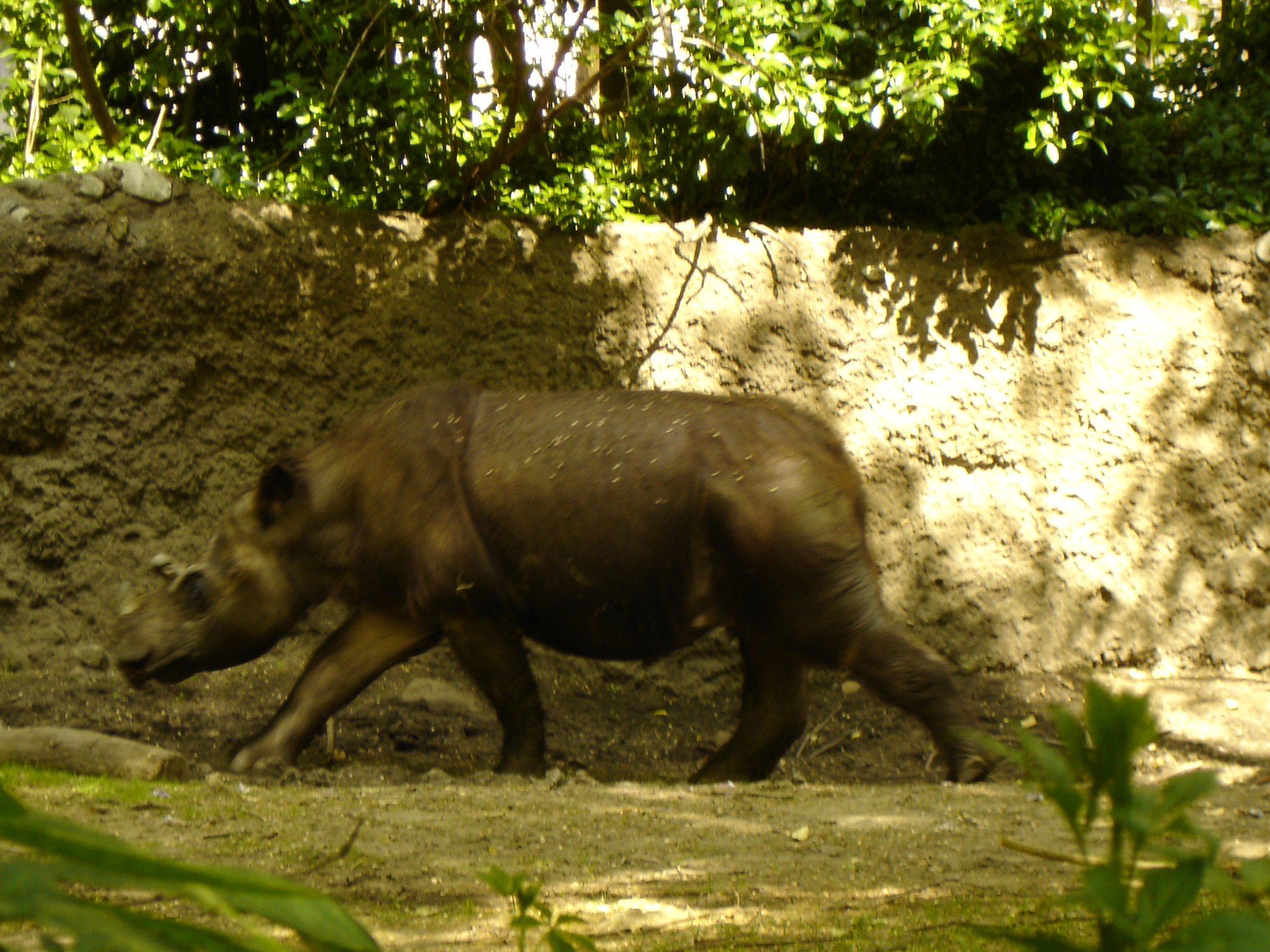
The Sumatran Rhinoceros

report

The Sumatran Rhinoceros (Dicerorhinus sumatrensis) is a member of the family Rhinocerotidae and one of five extant rhinoceroses. It is the smallest rhinoceros, standing about 120–145 centimetres (3.9–4.8 ft) high at the shoulder, with a body length of 250 centimetres (98 in) and weight of 500–800 kilograms (1100–1760 lb). Like the African species, it has two horns; the larger is the nasal horn, typically 15–25 centimetres (6–10 in), while the other horn is typically a stub. A coat of reddish-brown hair covers most of the Sumatran Rhino's body.

Image:Sumatran Rhinoceros - Rapunzel.jpg

Members of the species once ranged through rainforests, swamps and cloud forests in India, Burma, Thailand, Malaysia and islands in Indonesia. They are now critically endangered with only six substantial populations in the wild: four on Sumatra, one on Borneo, and one on peninsular Malaysia. Their numbers are difficult to determine because they are solitary animals and widely scattered across their range, but they are estimated to number around 300. The decline in the number of Sumatran Rhinoceros is attributed primarily to poaching for their horns, which are highly valued in traditional Chinese medicine, fetching as much as US$30,000 per kilogram on the black market.[4] The rhinos have also suffered from habitat loss as their forests have been cleared for lumber and conversion to agriculture.

The Sumatran Rhino is a mostly solitary animal except for courtship and child-rearing. It is the most vocal rhino species and also communicates through marking soil with its feet, twisting saplings into patterns, and leaving excrement. The species is much better studied than the similarly reclusive Javan Rhinoceros, in part because of a program that brought 40 Sumatran Rhinos into captivity with the goal of preserving the species. The program was considered a disaster even by its initiators, with most of the rhinos dying and no offspring being produced for nearly 20 years, an even worse decline than in the wild.

source: en.wikipedia.org

Blackbird

report

The Blackbird, Common Blackbird or Eurasian Blackbird (Turdus merula) is a species of true thrush which breeds in Europe, Asia, and North Africa, and has been introduced to Australia and New Zealand. It has a number of subspecies across its large range; a few of the Asian subspecies are sometimes considered as full species. Depending on latitude, the Blackbird may be resident, partially migratory or fully migratory.[2]Image:Blackbird 2.jpg
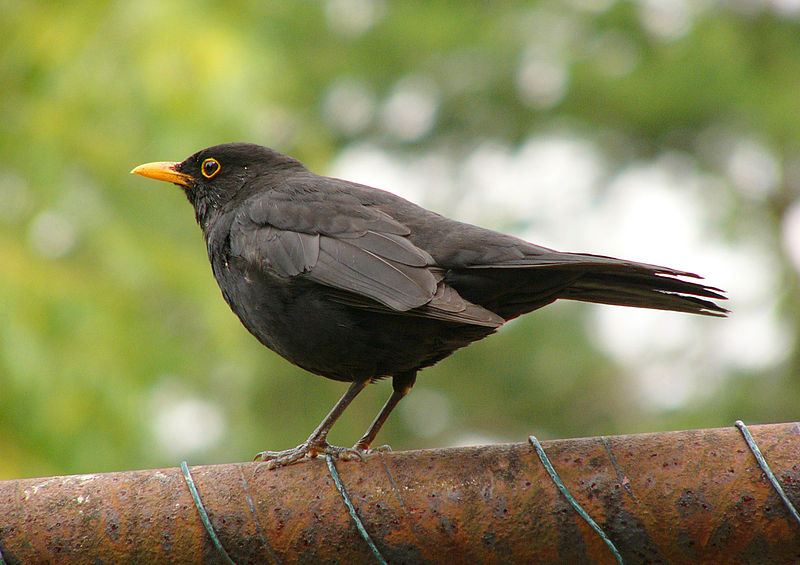
The male of the nominate subspecies, which is found throughout most of Europe, is all black except for a yellow eye-ring and bill and has a wide range of vocalisations; the adult female and juvenile have mainly brown plumage. This species breeds in woods and gardens, building a neat, mud-lined, cup-shaped nest. It is omnivorous, eating a wide range of insects, earthworms, seeds, berries, and fruits.

Both sexes are territorial on the breeding grounds, with distinctive threat displays, but are more gregarious during migration and in wintering areas. Pairs will stay in their territory throughout the year where the climate is sufficiently temperate. This common species has given rise to a number of literary and cultural references, frequently related to its melodious song.


Taxonomy

The Blackbird was described by Linnaeus in his Systema Naturae in 1758 as Turdus merula (characterised as T. ater, rostro palpebrisque fulvis).[3] The binomial name derives from two Latin words, Turdus, "thrush", and merula, "blackbird", the latter giving rise to the French name for this species, merle.[4] There are about 65 species of medium to large thrushes in the genus Turdus, characterised by rounded heads, longish pointed wings, and usually melodious songs. The Blackbird seems to be closest in evolutionary terms to the Island Thrush (T. poliocephalus) of the southwest Pacific, which probably diverged from merula stock fairly recently.[5]

It is not immediately clear in modern English why the name "Blackbird", first recorded in 1486, was applied to this species, but not to another common black European bird, such as the Carrion Crow, Raven, Rook or Jackdaw. However, in Old English, and in modern English up to about the 18th Century, "bird" was used only for smaller or young birds, and larger ones, such as crows were called "fowl". The Blackbird was therefore the only widespread and conspicuous "black bird" in the British Isles.[6] Until about the 17th century, another usual name for the species was ouzel, ousel or wosel (from Old English osle). Another variant occurs in Act 3 of Shakespeare's A Midsummer Night's Dream, where Bottom refers to The Woosell cocke, so blacke of hew, With Orenge-tawny bill. The ousel usage survived later in poetry, and still occurs as the name of the closely related Ring Ouzel, and in Water Ouzel, an alternative name for the unrelated but superficially similar White-throated Dipper (Cinclus cinclus).[7]

Juvenile T. m. merula

Two related Asian Turdus thrushes, the White-collared Blackbird (T. albocinctus) and the Grey-winged Blackbird (T. boulboul), are also named as blackbirds,[5] and the Somali Thrush (T. (olivaceus) ludoviciaeis) is alternatively known as the Somali Blackbird.[8]

Around 20 species of the New World icterid family are named as blackbirds because of their superficial resemblance to the Old World thrushes, but they are not closely related, being nearer to the New World warblers and tanagers in evolutionary terms.[9] They include the Red-winged Blackbird (Agelaius phoeniceus), Red-breasted Blackbird (Sturnella militaris), Yellow-headed Blackbird (Xanthocephalus xanthocephalus) and the Melodious Blackbird (Dives dives).[9]


Breeding

Eggs
Eggs

The male Blackbird attracts the female with a courtship display which consists of oblique runs combined with head-bowing movements, an open beak, and a "strangled" low song. The female remains motionless until she raises her head and tail to permit copulation.[20] This species is monogamous, and the established pair will usually stay together as long as they both survive.[11] Pair separation rates of up to 20% have been noted following poor breeding.[30] Although socially monogamous, there have been studies showing as much as 17% extra pair paternity.[31]

Nominate T. merula may commence breeding in March, but eastern and Indian races are a month or more later, and the introduced New Zealand birds start nesting in August.[5][21] The breeding pair prospect for a suitable nest site in a creeper or bush, favouring evergreen or thorny species such as ivy, holly, hawthorn, honeysuckle or pyracantha,[32] and the female builds a neat cup-shaped nest from grasses and similar vegetation, which she then lines with mud or muddy leaves. She lays three to five (usually four) bluish-green eggs marked with reddish-brown blotches,[20] heaviest at the larger end;[21] the eggs of nominate T. merula are 2.9 x 2.1 centimetres (1.14 x 0.93 in) in size and weigh 7.2 grammes (0.25 oz), of which 6% is shell.[33] Eggs of birds of the southern Indian races are paler than those from the northern subcontinent and Europe.[5]

Chicks
Chicks

The female incubates for 12–14 days before the altricial chicks are hatched naked and blind. Fledging takes another 10–19 (average 13.6) days, with both parents feeding the young and removing faecal sacs.[11] The young are fed by the parents for up to three weeks after leaving the nest, and will follow the adults begging for food. If the female starts another nest, the male alone will feed the fledged young.[20] Second broods are common, with the female reusing the same nest if the brood was successful, and three broods may be raised in the south of the Blackbird's range.[5]

Montane subspecies, such as T. maximus have a shorter breeding season, smaller clutches (2–4 eggs, averaging 2.86), but larger eggs than merula. They produce just one brood per year, and have a slightly shorter incubation period of 12–13 days, but a longer nestling period (16–18 days).[34]

A Blackbird has an average life expectancy of 2.4 years,[35] and, based on data from bird ringing, the oldest recorded age is 21 years and 10 months.[36]

Songs and calls

Singing maleSong (help·info)
Singing male

The first-year male Blackbird of the nominate race may start singing as early as late January in fine weather in order to establish a territory, followed in late March by the adult male. The male's song is a varied and melodious low-pitched fluted warble, given from trees, rooftops or other elevated perches mainly in the period from March to June, sometimes into the beginning of July. It has a number of other calls, including an aggressive seee, a pook-pook-pook alarm for terrestrial predators like cats, and various chink and chook, chook vocalisations. The territorial male invariably gives chink-chink calls in the evening in an (usually unsuccessful) attempt to deter other Blackbirds from roosting in its territory overnight.[20] Like other passerine birds, it has a thin high seee alarm call for threats from birds of prey since the sound is rapidly attenuated in vegetation, making the source difficult to locate.[37]

At least two subspecies, T. m. merula and T. m. nigropileus, will mimic other species of birds, cats, humans or alarms, but this is usually quiet and hard to detect. The large mountain races, especially T. m. maximus, have comparatively poor songs, with a limited repertoire compared with the western, peninsular Indian and Sri Lankan taxa.[5]

Feeding

The Blackbird is omnivorous, eating a wide range of insects, earthworms, seeds and berries. It feeds mainly on the ground, running and hopping with a start-stop-start progress. It pulls earthworms from the soil, usually finding them by sight, but sometimes by hearing, and roots through leaf litter for other invertebrates. Small vertebrates such as frogs, tadpoles and lizards are occasionally hunted. This species will also perch in bushes to take berries and collect caterpillars and other active insects.[20] Animal prey predominates, and is particularly important during the breeding season, with windfall apples and berries taken more in the autumn and winter. The nature of the fruit taken depends on what is locally available, and frequently includes exotics in gardens. In northern India, banyan and mulberry fruits are frequently eaten, with Erythrina and Trema species featuring further south.[5]


source: en.wikipedia.org

Joint United Nations Programme on HIV/AIDS

report

The Joint United Nations Programme on HIV and AIDS, or UNAIDS, is the main advocate for accelerated, comprehensive and coordinated global action on the HIV epidemic.

UNAIDS' mission is to lead, strengthen and support an expanded response to HIV and AIDS that includes preventing transmission of HIV, providing care and support to those already living with the virus, reducing the vulnerability of individuals and communities to HIV and alleviating the impact of the epidemic.

Five major components make up the role of UNAIDS:

  1. Leadership and advocacy for effective action on the epidemic
  2. Strategic information and technical support to guide efforts against AIDS worldwide
  3. Tracking, monitoring and evaluation of the epidemic and of responses to it
  4. Civil society engagement and the development of strategic partnerships
  5. Mobilization of resources to support an effective response

Headquartered in Geneva, Switzerland, its first and current executive director is Dr. Peter Piot, Under-Secretary General of the United Nations.


UNAIDS Cosponsors

The Cosponsors and the UNAIDS Secretariat comprise the Committee of Cosponsoring Organizations, which meets annually.


Role

The aim of UNAIDS is to help mount and support an expanded response – one that engages the efforts of many sectors and partners from government and civil society.

Established in 1994 by a resolution of the UN Economic and Social Council and launched in January 1996, UNAIDS is guided by a Programme Coordinating Board with representatives of 22 governments from all geographic regions, the UNAIDS Cosponsors, and five representatives of nongovernmental organizations (NGOs), including associations of people living with HIV/AIDS.


Partnerships

The United Nations Declaration Commitment on HIV/AIDS provides the guiding framework for UNAIDS action. Promoting partnerships among various stakeholders is reflected within the leadership section of the Declaration of Commitment. In particular, it calls for complementation of government efforts by the full and active participation of civil society, the business community and the private sector through:

  • Establishing and strengthening mechanisms that involve civil society including faith-based organizations (FBOs), the private sector, and people living with HIV/AIDS at all levels
  • Encouraging and supporting local and national organizations to expand and strengthen regional partnerships, coalitions and networks
  • Full participation of people living with HIV/AIDS (PLWHA), those in vulnerable groups and people mostly at risk, particularly young people
  • Addressing issue of stigma and discrimination.

UNAIDS works to promote partnerships among and between this diverse and broad range of non-state entities. This calls for increases in both the number of new actors, as well as in innovative ways of working, to facilitate increased capacity of non-state entities to respond effectively to the epidemic at all levels.

With the momentum generated by the UN Special Session on HIV/AIDS, the main challenges are to:

  • Sustain and deepen involvement of those contributing and critical to the response such as PLWHA organizations
  • Move beyond the organizations already involved and reach out to optimally engage a broad range of sectors/actors.

From policy to action

In engaging non-state entities in an expanded response to the epidemic, the UNAIDS Secretariat:

  • Fosters and supports global, regional and country level partnerships which include linkages between and among civil society, private sector, philanthropy, media, and with particular attention to organizations of people living with HIV/AIDS
  • Supports governments and UN agencies in developing partnerships with non-state entities. This includes support for approaches intended to increase participation, improve connectedness of efforts and strengthen the various participants' capacity for action.

more info click http://en.wikipedia.org/wiki/UNAIDS

source: en.wikipediaa.org

Human immunodeficiency virus (HIV)

explanation


Human immunodeficiency virus (HIV) is a retrovirus that can lead to acquired immunodeficiency syndrome (AIDS), a condition in humans in which the immune system begins to fail, leading to life-threatening opportunistic infections. Previous names for the virus include human T-lymphotropic virus-III (HTLV-III), lymphadenopathy-associated virus (LAV), and AIDS-associated retrovirus (ARV).[1][2]

Infection with HIV occurs by the transfer of blood, semen, vaginal fluid, pre-ejaculate, or breast milk. Within these bodily fluids, HIV is present as both free virus particles and virus within infected immune cells. The four major routes of transmission are unprotected sexual intercourse, contaminated needles, breast milk, and transmission from an infected mother to her baby at birth. Screening of blood products for HIV has largely eliminated transmission through blood transfusions or infected blood products in the developed world.

HIV infection in humans is now pandemic. As of January 2006, the Joint United Nations Programme on HIV/AIDS (UNAIDS) and the World Health Organization (WHO) estimate that AIDS has killed more than 25 million people since it was first recognized on December 1, 1981, making it one of the most destructive pandemics in recorded history. It is estimated that about 0.6% of the world's population is infected with HIV.[3] In 2005 alone, AIDS claimed an estimated 2.4–3.3 million lives, of which more than 570,000 were children. A third of these deaths are occurring in sub-Saharan Africa, retarding economic growth and increasing poverty.[4] According to current estimates, HIV is set to infect 90 million people in Africa, resulting in a minimum estimate of 18 million orphans.[5] Antiretroviral treatment reduces both the mortality and the morbidity of HIV infection, but routine access to antiretroviral medication is not available in all countries.[6]

HIV primarily infects vital cells in the human immune system such as helper T cells (specifically CD4+ T cells), macrophages and dendritic cells. HIV infection leads to low levels of CD4+ T cells through three main mechanisms: firstly, direct viral killing of infected cells; secondly, increased rates of apoptosis in infected cells; and thirdly, killing of infected CD4+ T cells by CD8 cytotoxic lymphocytes that recognize infected cells. When CD4+ T cell numbers decline below a critical level, cell-mediated immunity is lost, and the body becomes progressively more susceptible to opportunistic infections. If untreated, eventually most HIV-infected individuals develop AIDS (Acquired Immunodeficiency Syndrome) and die; however about one in ten remains healthy for many years, with no noticeable symptoms.[7] Treatment with anti-retrovirals, where available, increases the life expectancy of people infected with HIV. It is hoped that current and future treatments may allow HIV-infected individuals to achieve a life expectancy approaching that of the general public.


Classification

HIV is a member of the genus Lentivirus,[8] part of the family of Retroviridae.[9] Lentiviruses have many common morphologies and biological properties. Many species are infected by lentiviruses, which are characteristically responsible for long-duration illnesses with a long incubation period.[10] Lentiviruses are transmitted as single-stranded, positive-sense, enveloped RNA viruses. Upon entry of the target cell, the viral RNA genome is converted to double-stranded DNA by a virally encoded reverse transcriptase that is present in the virus particle. This viral DNA is then integrated into the cellular DNA by a virally encoded integrase so that the genome can be transcribed. Once the virus has infected the cell, two pathways are possible: either the virus becomes latent and the infected cell continues to function, or the virus becomes active and replicates, and a large number of virus particles are liberated that can then infect other cells.

Two species of HIV infect humans: HIV-1 and HIV-2. HIV-1 is thought to have originated in southern Cameroon after jumping from wild chimpanzees (Pan troglodytes troglodytes) to humans during the twentieth century.[11][12] HIV-1 is the virus that was initially discovered and termed LAV. It is more virulent and relatively easy transmitted and is the cause of the majority of HIV infections globally. HIV-2 may have originated from the Sooty Mangabey (Cercocebus atys), an Old World monkey of Guinea-Bissau, Gabon, and Cameroon.[13] HIV-2 is less transmittable than HIV-1 and is largely confined to West Africa.[13]


Structure and genome

Diagram of HIV
Diagram of HIV

HIV is different in structure from other retroviruses. It is about 120 nm in diameter (120 billionths of a meter; around 60 times smaller than a red blood cell) and roughly spherical.[30] It is composed of two copies of positive single-stranded RNA that codes for the virus's nine genes enclosed by a conical capsid composed of 2,000 copies of the viral protein p24.[31] The single-stranded RNA is tightly bound to nucleocapsid proteins, p7 and enzymes needed for the development of the virion such as reverse transcriptase, proteases, ribonuclease and integrase. A matrix composed of the viral protein p17 surrounds the capsid ensuring the integrity of the virion particle.[31] This is, in turn, surrounded by the viral envelope which is composed of two layers of fatty molecules called phospholipids taken from the membrane of a human cell when a newly formed virus particle buds from the cell. Embedded in the viral envelope are proteins from the host cell and about 70 copies of a complex HIV protein that protrudes through the surface of the virus particle.[31] This protein, known as Env, consists of a cap made of three molecules called glycoprotein (gp) 120, and a stem consisting of three gp41 molecules that anchor the structure into the viral envelope.[32] This glycoprotein complex enables the virus to attach to and fuse with target cells to initiate the infectious cycle.[32] Both these surface proteins, especially gp120, have been considered as targets of future treatments or vaccines against HIV.[33]

Of the nine genes that are encoded within the RNA genome, three of these genes, gag, pol, and env, contain information needed to make the structural proteins for new virus particles.[31] For example, env codes for a protein called gp160 that is broken down by a viral enzyme to form gp120 and gp41. The six remaining genes, tat, rev, nef, vif, vpr, and vpu (or vpx in the case of HIV-2), are regulatory genes for proteins that control the ability of HIV to infect cells, produce new copies of virus (replicate), or cause disease.[31] The protein encoded by nef, for instance, appears necessary for the virus to replicate efficiently, and the vpu-encoded protein influences the release of new virus particles from infected cells.[31] The ends of each strand of HIV RNA contain an RNA sequence called the long terminal repeat (LTR). Regions in the LTR act as switches to control production of new viruses and can be triggered by proteins from either HIV or the host cell.[31]


HIV test

Many HIV-positive people are unaware that they are infected with the virus.[70] For example, less than 1% of the sexually active urban population in Africa have been tested and this proportion is even lower in rural populations.[70] Furthermore, only 0.5% of pregnant women attending urban health facilities are counselled, tested or receive their test results.[70] Again, this proportion is even lower in rural health facilities.[70] Since donors may therefore be unaware of their infection, donor blood and blood products used in medicine and medical research are routinely screened for HIV.[71]

HIV-1 testing consists of initial screening with an enzyme-linked immunosorbent assay (ELISA) to detect antibodies to HIV-1. Specimens with a nonreactive result from the initial ELISA are considered HIV-negative unless new exposure to an infected partner or partner of unknown HIV status has occurred. Specimens with a reactive ELISA result are retested in duplicate.[72] If the result of either duplicate test is reactive, the specimen is reported as repeatedly reactive and undergoes confirmatory testing with a more specific supplemental test (e.g., Western blot or, less commonly, an immunofluorescence assay (IFA)). Only specimens that are repeatedly reactive by ELISA and positive by IFA or reactive by Western blot are considered HIV-positive and indicative of HIV infection. Specimens that are repeatedly ELISA-reactive occasionally provide an indeterminate Western blot result, which may be either an incomplete antibody response to HIV in an infected person, or nonspecific reactions in an uninfected person.[73] Although IFA can be used to confirm infection in these ambiguous cases, this assay is not widely used. Generally, a second specimen should be collected more than a month later and retested for persons with indeterminate Western blot results. Although much less commonly available, nucleic acid testing (e.g., viral RNA or proviral DNA amplification method) can also help diagnosis in certain situations.[72] In addition, a few tested specimens might provide inconclusive results because of a low quantity specimen. In these situations, a second specimen is collected and tested for HIV infection.


more info just click http://en.wikipedia.org/wiki/Hiv